

Description
The .300 H&H Magnum Cartridge was introduced by the British company Holland & Holland as the Super-Thirty in June, 1925. The case was belted like the .375 H&H Magnum, and is based on the same case, as also is the .244 H&H Magnum. The belt is for headspace as the cases’ shoulders have a narrow slope rather than an actual shoulder. More modern magnums continue this practice, but headspacing on the belt is not necessary with their more sharply angled shoulders. The cartridge was used by American shooter Ben Comfort to win the 1000-yard Wimbledon Cup Match at Camp Perry in 1935, and it was used again to win the international 1,000 yard competition in 1937. Winchester chambered the Model 70 in .300 Holland & Holland Magnum in 1937.
The cartridge offered superior ballistics to the .30-06 for long range, and the .300 H&H is almost as versatile with all bullet weights and types, especially if well-developed handloads are used. It excels with the heaviest .30-calibre bullets in the 180–220-grain range.
It has never been as popular as the .30-06; but the mystique of well-crafted rifles chambered for the .300 H&H keeps the cartridge in use despite its repeatedly reported demise. The .300 H&H is a fine African plains game cartridge, and suitable for all but the most dangerous big game.
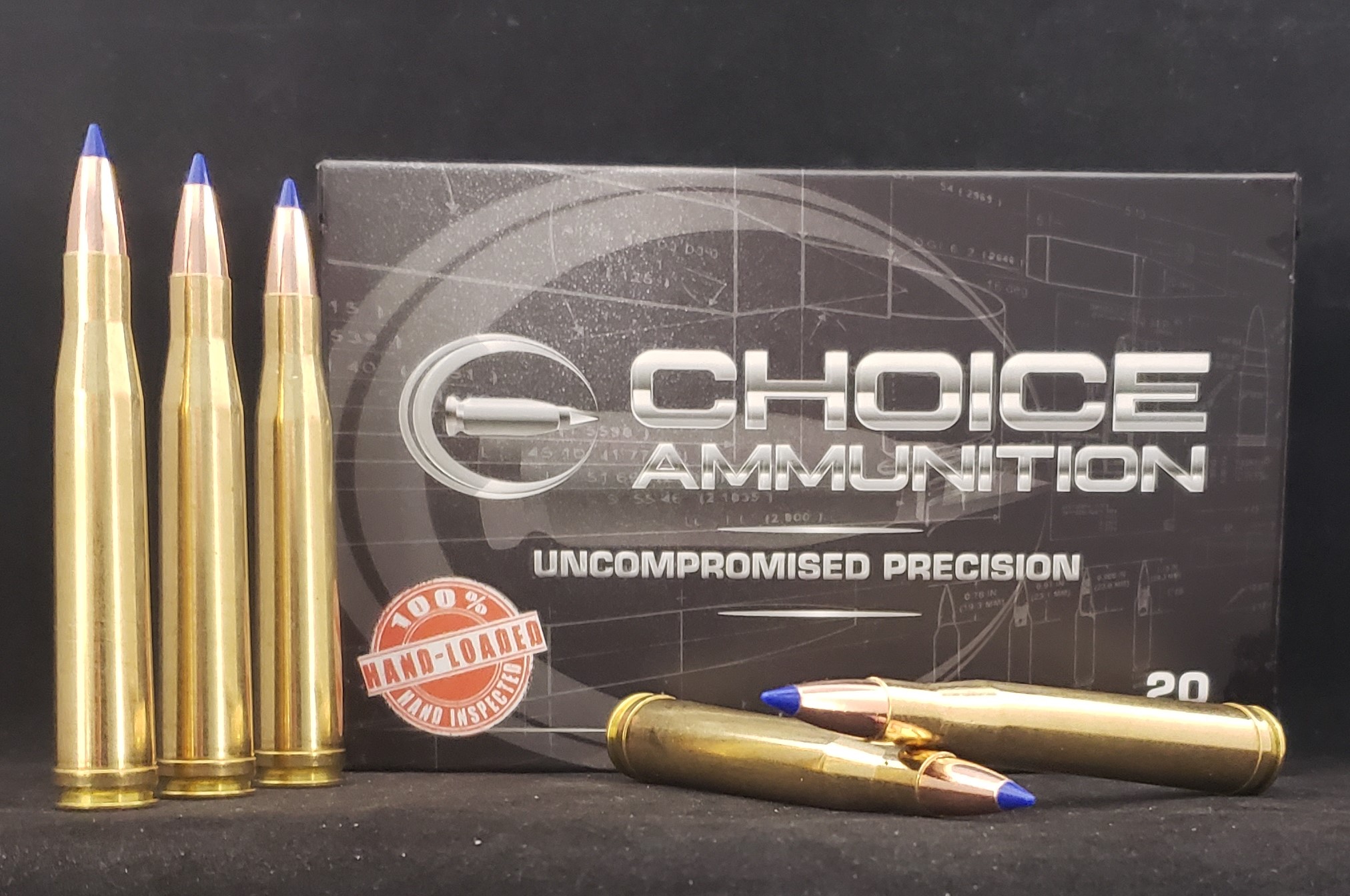
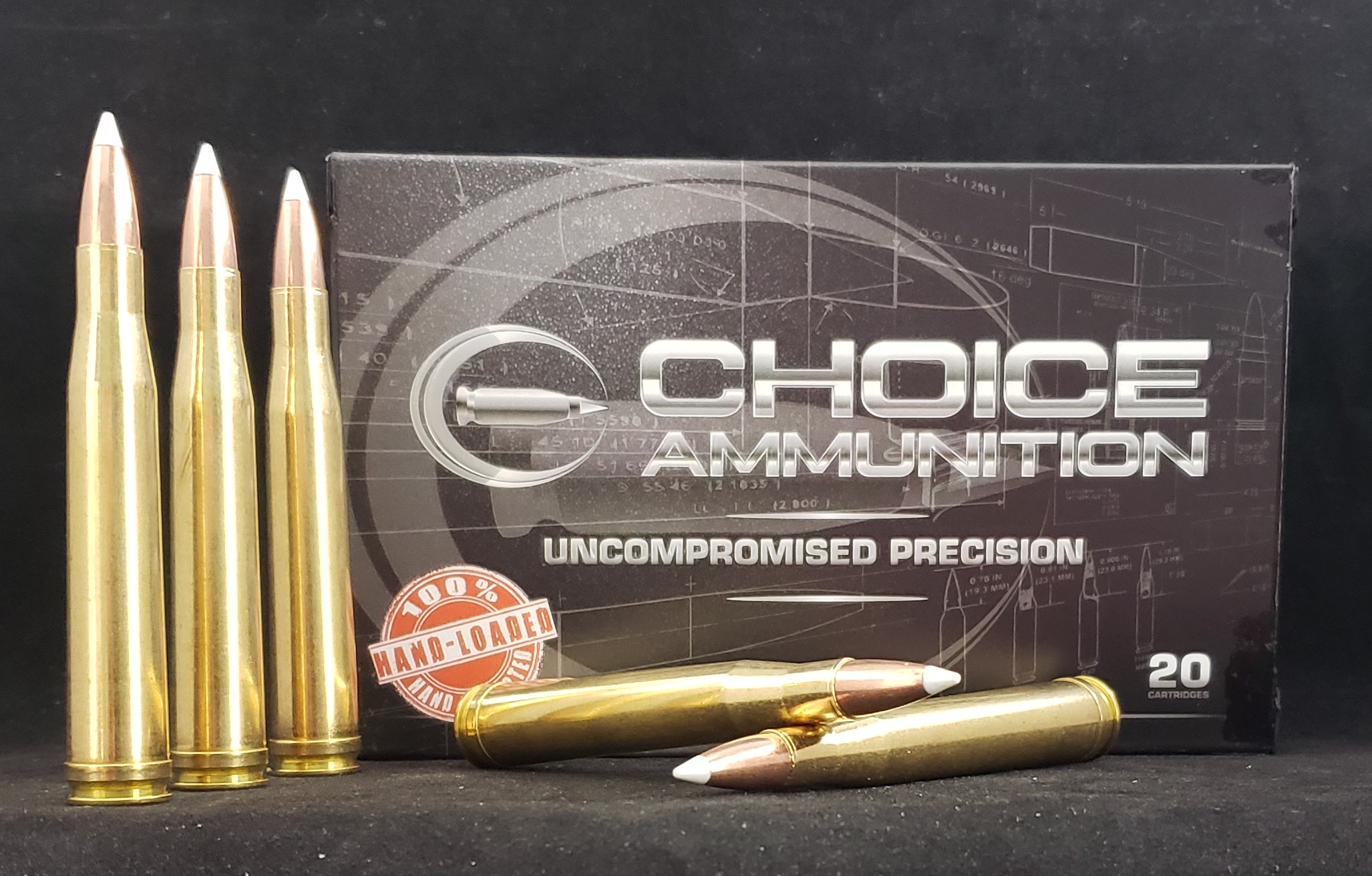
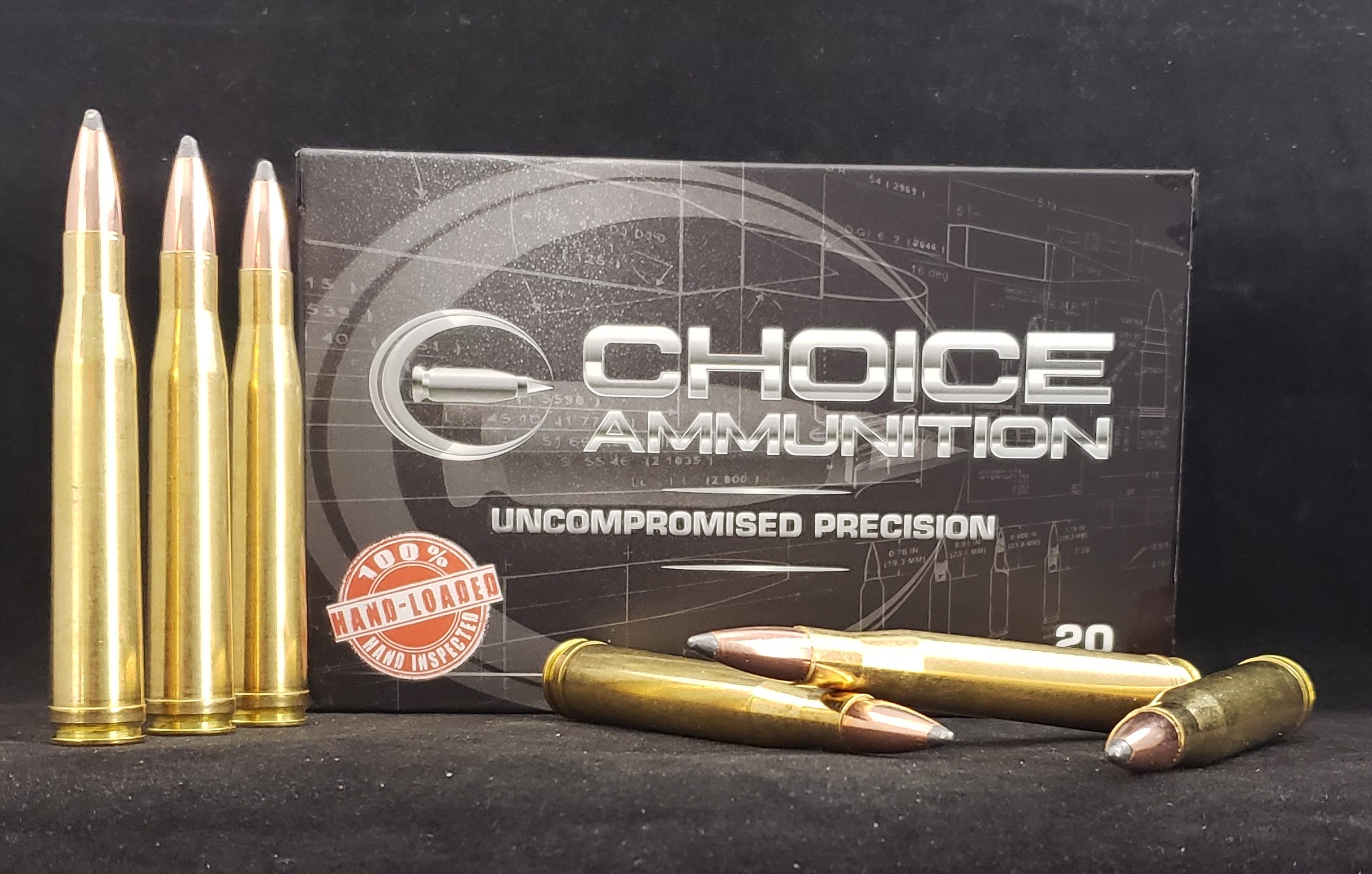
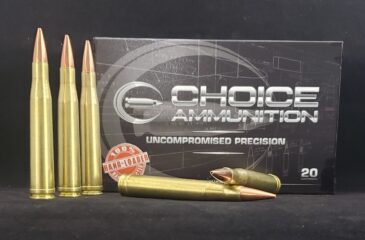
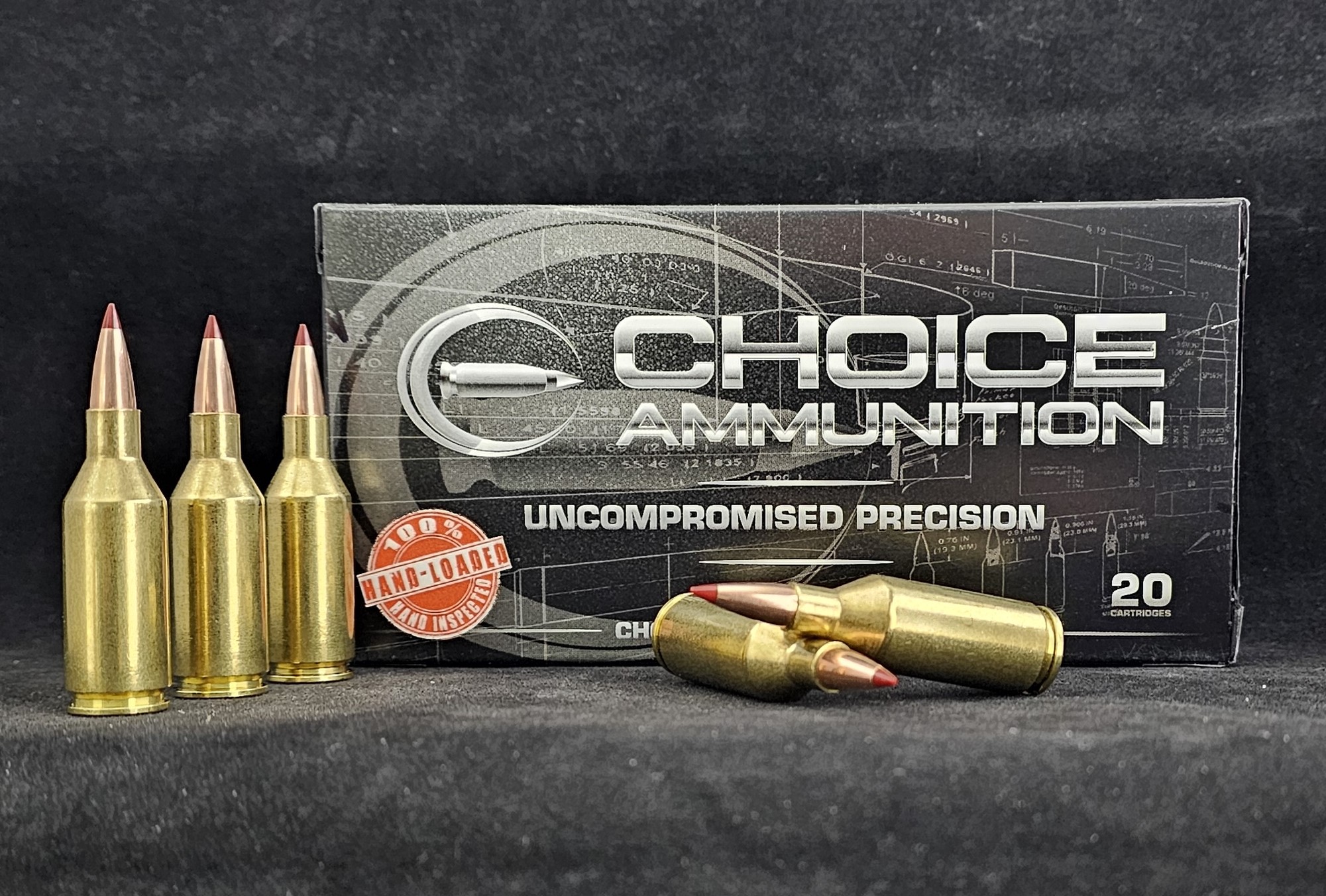
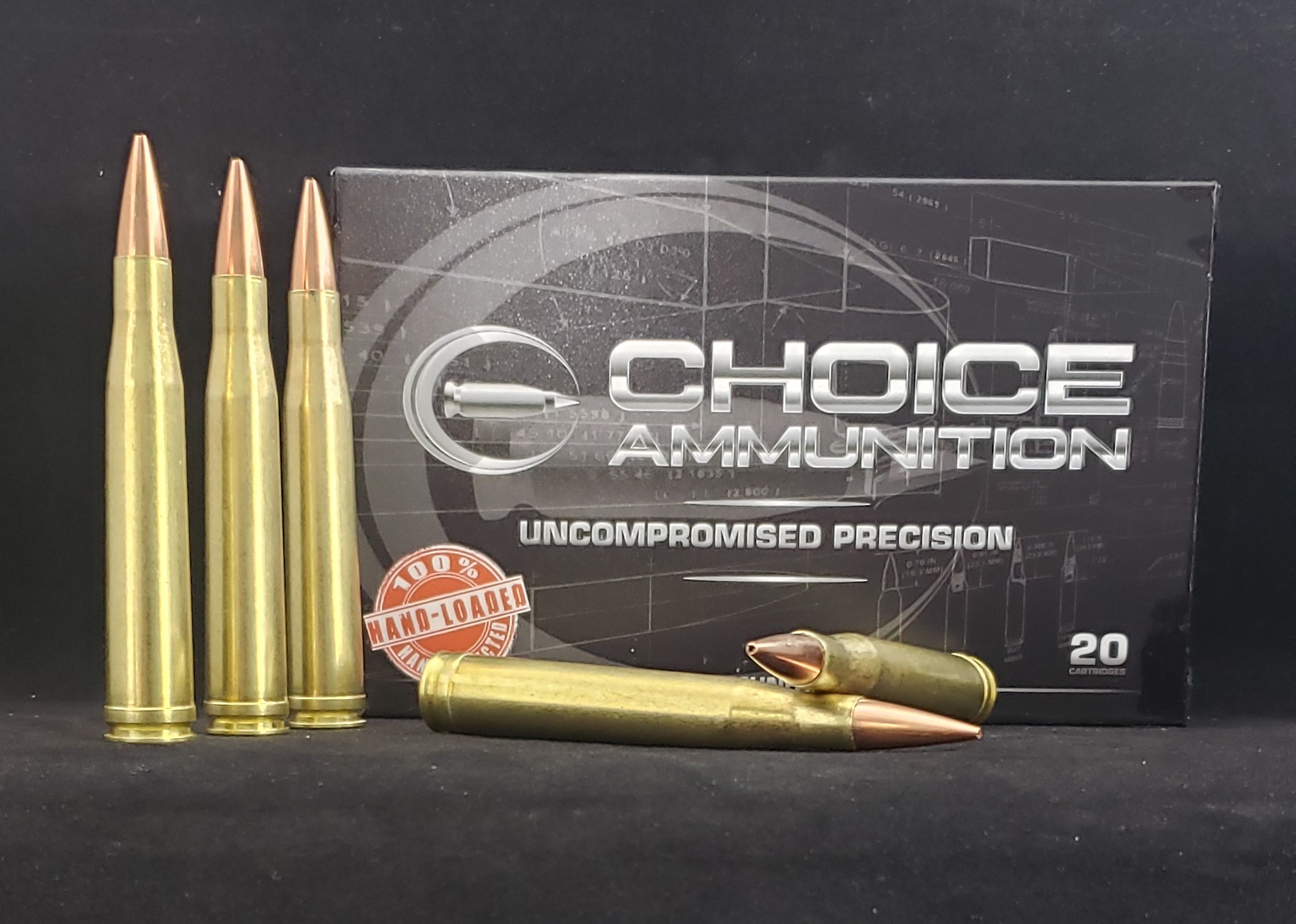
Choice Ammunition has introduced the 168 grain Berger VLD-H in .300 H&H Magnum with the same 100% hand-loading techniques as our other calibers. Our loading techniques and extremely tight tolerances are only matched by passionate hand-loaders in their own loading rooms. Our consistencies box to box and lot to lot, are created by continuous testing at the range- adjusting varied powder and brass lot formulas to match exact velocities and points of impact as the last time we loaded this caliber. Exact seating depths and our proprietary load formulas produce a round of ammunition you can count on for accuracy and dependability each and every time- and at that critical moment in the field when it all comes down to the shot!
The Bullet-
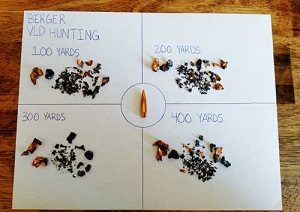
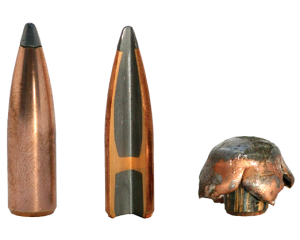
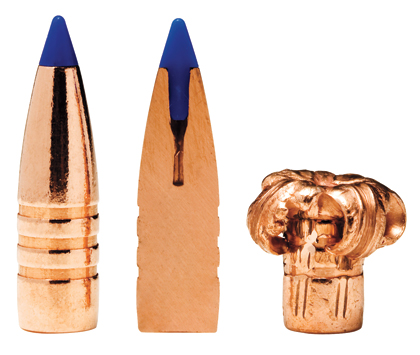
The Berger VLD design incorporates a sharp nose that allows the bullet to penetrate 2″ to 3″ before it starts to expand. After the initial expansion, the bullet will shed between 40% and 65% of its weight as shrapnel into the surrounding tissue (internal organs). The combination between the shrapnel and the hydrostatic shock produces a massive wound cavity within the vital area that will be 13″ – 15″ long. This massive wound cavity results in the animal dropping fast since most go into shock after such a tremendous blow. Those animals that don’t go down immediately will soon succumb to blood pressure loss and/or organ failure producing a quick ethical kill.
- 100% Hand-Loaded
- Velocity 3,043 fps
- G-1 BC 0.498